Member Spotlight: Shukhrat Safarov
This month's member spotlight is Shukhrat Safarov of iZZi Ride, Inc., a member of the Mid-Atlantic Chapter!
Keep reading below to learn about Shukhrat's professional background and ACT experience so far.
Please provide a brief background about yourself and your organization.
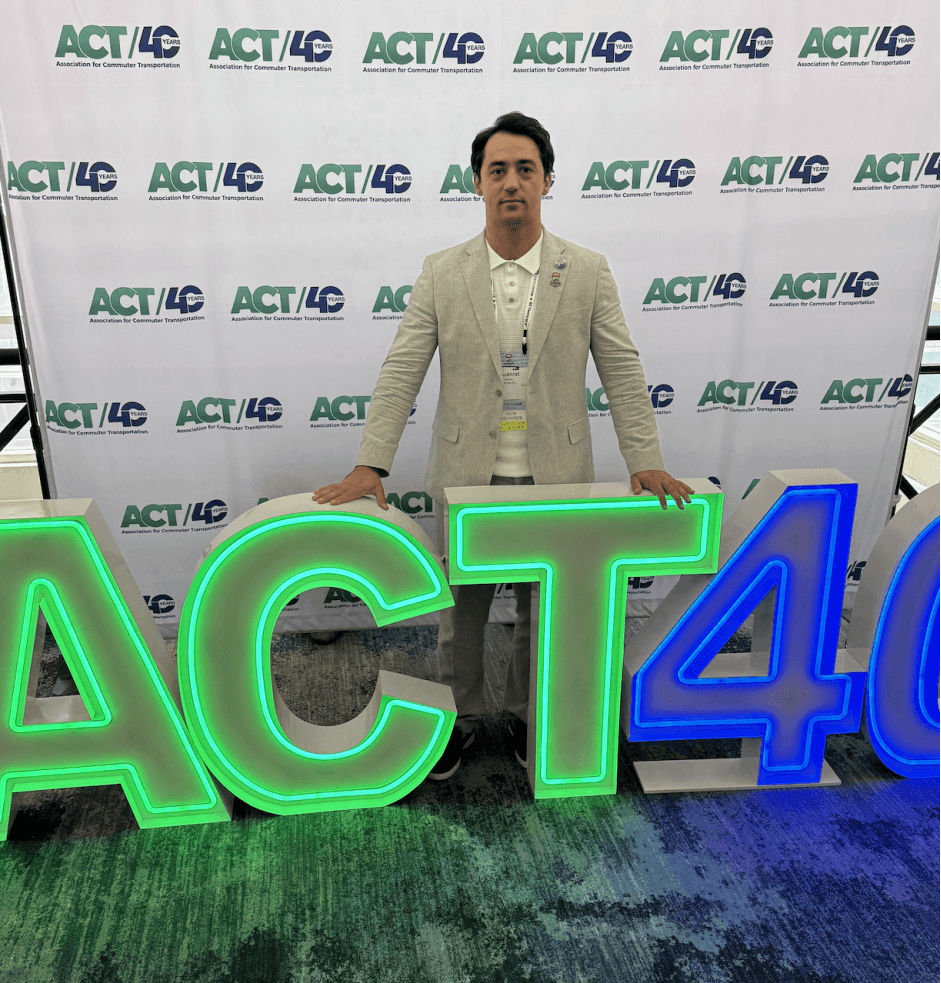
I am the Founder and CEO of iZZi Ride, a Pennsylvania-based mobility company developing an intercity carpooling platform that connects drivers and passengers traveling in the same direction. Since launching, iZZi Ride has grown to more than 10,000 users, with early activity focused on regional travel such as the Philadelphia–New York corridor. We are working to make intercity trips more accessible, flexible, and convenient while making better use of existing vehicle capacity.
I am especially interested in how carpooling technology can complement public transportation, improve first- and last-mile connections, and expand mobility options where traditional services do not always fit every trip.
What brought you to TDM? How did you get involved in the field?
I came to TDM through the experience of building iZZi Ride. As we worked with people making regional trips, I began to see that transportation decisions are influenced by much more than the availability of a bus or train. Travelers also think about schedules, cost, pickup and drop-off locations, first- and last-mile access, convenience, and trust. Learning more about carpooling, shared mobility, commuter programs, and transportation planning helped me realize that many of the challenges we were trying to solve were closely connected to TDM. That realization led me to become more involved with the broader transportation community.
Why did you get involved in ACT?
I joined ACT because I wanted to learn from people who work on transportation challenges from different perspectives and to better understand where intercity carpooling can fit within the broader TDM ecosystem. Building a technology platform gives us direct insight into user behavior, but agencies, universities, employers, researchers, TMAs, and experienced TDM professionals bring knowledge that a startup cannot develop on its own. ACT gives me the opportunity to exchange those perspectives, learn from established programs, and explore how new mobility tools like iZZi Ride can complement existing transportation options.
What’s one of the things you’re excited to get involved with in ACT?
I am excited to become more involved in ACT’s carpooling and technology communities and to continue many of the conversations I started at ACT’s 40th International Conference in Philadelphia. One of the things I appreciated most about the conference was the range of perspectives represented — from public agencies and universities to researchers, employers, and mobility providers. I look forward to learning from that community while also sharing what we are seeing through iZZi Ride. Over time, I hope those conversations can lead to research, partnerships, and pilot opportunities around regional and intercity shared mobility.
What would you tell someone thinking about becoming a member of ACT?
I would tell them that ACT is valuable because it brings together people who may be working on the same transportation challenge from completely different angles. In a short time, I have met people from public agencies, universities, research organizations, employers, technology companies, and mobility providers who were open to sharing their experience and ideas. For someone working in transportation, that kind of environment helps you see beyond your own organization and understand how your work connects to a much larger mobility ecosystem. For me as a new member, that has already been one of the biggest benefits.
What do you see as future opportunities and/or challenges for TDM?
I see a major opportunity in connecting parts of the transportation system that often operate separately. Public transit, employer and university programs, carpooling, shared mobility, and new technology can work together to give people more practical travel choices. I also believe regional and intercity carpooling deserves greater attention, because many trips fall outside traditional commute patterns or are difficult to serve efficiently with one mode alone. The challenge will be building trust, consistent participation, strong partnerships, and scalable models while making sure new mobility solutions complement the transportation services communities already rely on.