Advocacy Resources
Use Your Voice
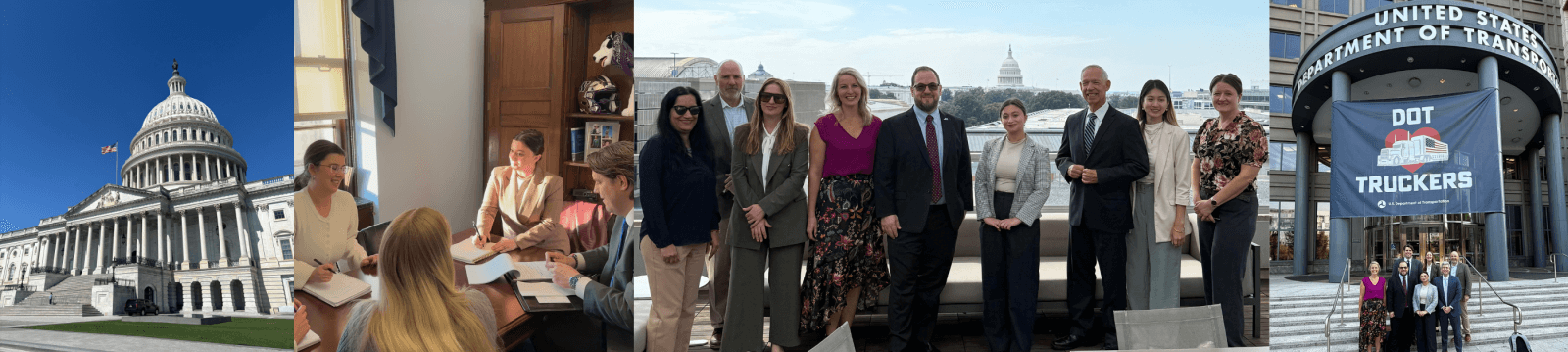
Your voice is the most powerful tool that ACT has to influence policy at every level. Lawmakers want to hear directly from constituents like you - your experiences show how their decisions make a difference. We encourage all members to take an active role in educating elected officials about the benefits and impacts of their TDM programs and services. More importantly, you can leave the lobbying up to ACT staff and our government affairs team.
Ready to make an impact? Explore the resources below and join us in shaping policy today!
Ways to Get Involved
- Share Your TDM Success Stories or Examples with ACT Staff. Your real-world examples help ACT demonstrate the value of TDM in our meetings with Congressional staff. Have a story to share? Email Emma at ewasserman@actweb.org.
- Call or Email your Representative. ACT provides scripts for calls and emails in your advocacy efforts - just add your details.
Calling: Find your Representative or Senator's number on their official website. You'll likely be speaking to an intern who will simply confirm your zip code and take down your concern. Pro-tip: Nervous about calling? Call after hours and leave a voicemail instead.
Emailing: ACT can provide you with proper staffer's email. Copy and paste the completed email script in the body of the e-mail and CC Emma (ewasserman@actweb.org) from the ACT team so we can track engagement.
- Participate in a Meeting with Congressional Staff. ACT's government affairs team regularly meets with Congressional offices, and welcomes any ACT member to join. Congressional offices want to hear from their constituents, so your participation is incredibly effective.
If you have any questions or concerns about advocacy, please contact Emma (ewasserman@actweb.org). She is always open to talk!
What is Advocacy?
What is Lobbying?
I'm afraid I can't participate in ACT's advocacy efforts because of my job. What are some activities that are not considered lobbying?
-
Communication with the judicial or executive branch or administrative agencies
-
Discussion of broad issues that does not refer to a specific piece of legislation
-
Providing a strong opinion on a specific piece of legislation but omitting a call for action
-
Naming legislators in favor of or against an action and omitting a request to contact them
-
Preparing and distributing a nonpartisan analysis of a legislative proposal
-
Testifying for or providing assistance to a legislative committee after a written request
-
Self-defense lobbying where the organization’s future is threatened
-
Lobbying as private citizens and not as representatives of the organization
More Resources
|
|
|